INDONESIA’S POLITICAL TRANSITION: NOT A SPECULATIVE APPROACH
Political transitions inevitably bring changes in the configuration of power. A new administration does not simply inherit the authority of its predecessor; it also assumes responsibility for defining its own political priorities, establishing policy direction, and building the institutional arrangements required to implement its governing agenda. In a presidential system, this process may involve changes in cabinet composition, adjustments to political alliances, the redistribution of administrative responsibilities, and a reassessment of the government’s relationship with influential political actors. Such developments should not automatically be interpreted as signs of political instability. More often, they represent the normal consequences of a transition from one governing leadership to another.
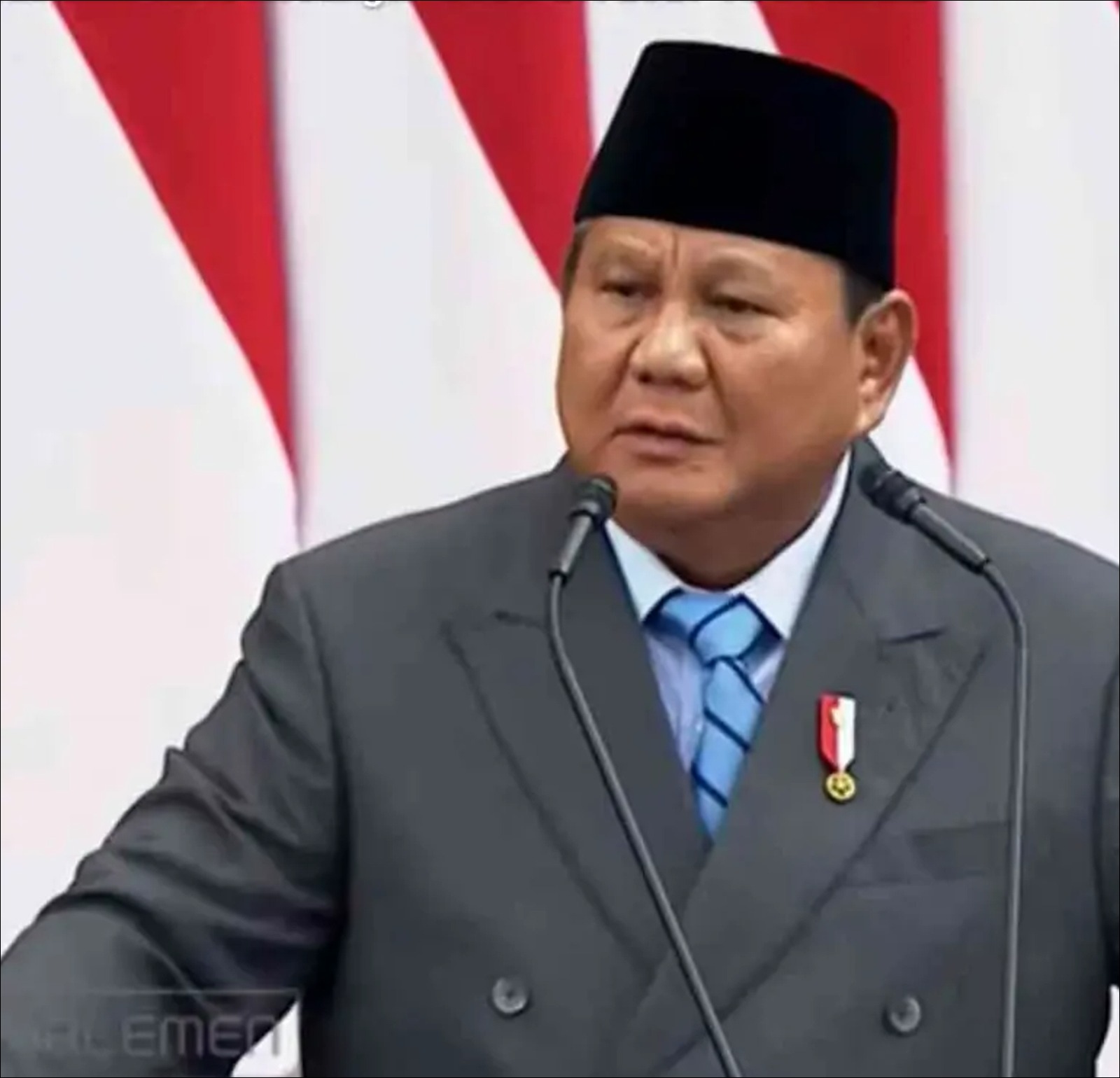
Indonesia is currently experiencing this process under President Prabowo Subianto. His administration is gradually defining its own policy priorities, including a stronger emphasis on national economic sovereignty, the management of strategic natural resources, industrial development, food and energy security, and a more substantial role for the state in directing economic transformation. These priorities inevitably require adjustments to existing political and institutional arrangements. The central question, therefore, is not whether the president is consolidating political authority, but whether that authority is being exercised within constitutional boundaries and translated into policies that generate sustainable national benefits.
Political consolidation, in this sense, is not inherently synonymous with authoritarianism or institutional deterioration. A president elected through a constitutional process must have sufficient political and administrative capacity to implement the program presented to voters. Without an effective governing coalition, coherent cabinet coordination, and a functioning bureaucracy, even a legitimate electoral mandate may become difficult to translate into public policy. The consolidation of governing authority can therefore be understood as part of the process through which an administration establishes political coherence and policy effectiveness.
Nevertheless, political strength must remain subject to institutional accountability. The distinction is essential. A government may legitimately seek greater coordination and control over its policy agenda, but it cannot use political authority to weaken constitutional oversight, undermine judicial independence, or disregard legal obligations. The quality of political consolidation must ultimately be measured by the strength of the institutions it builds, rather than by the extent of power accumulated by the executive.
The relationship between political leadership and policy continuity is rarely straightforward. A new president may inherit programs, institutions, and political alliances from the previous administration, but inheritance does not require permanent dependence. The president must retain the political space to determine which policies should continue, which should be adjusted, and which should be replaced.
This is particularly relevant in Indonesia, where political coalitions often extend beyond ideological alignment and are shaped by electoral calculations, parliamentary support, regional interests, and elite negotiations. An electoral coalition is not necessarily a permanent political command structure. Once a president assumes office, the incentives and responsibilities of governing differ from those of campaigning. Political actors who previously cooperated may gradually pursue different priorities, while new alliances may emerge around the administration’s evolving agenda.
From this perspective, changes in political relationships should be understood as part of the institutional and strategic adaptation of a new government. They do not automatically indicate a deliberate attempt to eliminate political opponents or dismantle the legacy of a predecessor. Such interpretations require evidence of specific actions, intentions, and institutional consequences.
Prabowo’s administration should therefore be assessed according to its own policy performance and institutional conduct. The relevant question is whether its political consolidation strengthens the government’s capacity to deliver public programmes, improve administrative coordination, and implement national development priorities. If it does, consolidation may contribute to governing effectiveness. If it produces excessive centralization, weakens oversight, or concentrates decision-making without adequate accountability, it may instead create institutional vulnerabilities.
The distinction between these two outcomes is far more important than speculation about personal rivalries among political elites.
The resignation of Vice President Gibran Rakabuming Raka has attracted considerable attention, partly because it represents an unusual development in Indonesia’s post-Reformasi presidential politics. However, its political significance should be assessed proportionately rather than exaggerated through assumptions about an impending power struggle or a breakdown of national stability.
A vice president occupies an important constitutional position, but the political consequences of a resignation depend on the circumstances surrounding it. The departure of an officeholder does not automatically destabilize the government, particularly when the president remains in office, the executive administration continues to function, and constitutional mechanisms remain available to address the resulting vacancy.
The Indonesian Constitution provides a framework for filling a vacant vice-presidential position. Under Article 8, paragraph (2), the People’s Consultative Assembly (MPR) must convene within sixty days to elect a vice president from two candidates nominated by the president. This mechanism demonstrates that a vacancy in the vice-presidential office does not, by itself, require a presidential election or create a constitutional vacuum. The continuity of government remains institutionally protected, provided the relevant constitutional procedures are properly followed.
The more important consideration is the political capacity of the individual concerned. A vice president’s departure could become a source of national instability if that individual possessed an independent political organization capable of mobilizing significant opposition, commanded substantial institutional or security influence, controlled a decisive parliamentary coalition, or had the capacity to trigger a serious constitutional confrontation. Under such circumstances, a resignation might become part of a broader political crisis.
However, such a conclusion cannot be presumed merely because the departing vice president is the son of a former president or because his political position is associated with a prominent political family. Family connections and political symbolism are not equivalent to independent political power. Nor does public visibility automatically translate into the organizational capacity required to destabilize a national administration.
The relevant question is whether the departing vice president possesses sufficient independent political resources to challenge the government’s institutional stability. Without evidence of such capacity, the resignation should be treated primarily as a change in the composition of the executive leadership, accompanied by the constitutional procedures necessary to fill the vacancy.